
Where most independent website projects stall is rarely the technology. It is the rhythm. Week one brims with energy and gets spent nudging the homepage around, week three collides with factory orders, and a month later the site sits half finished with nobody mentioning it again.This post skips platform rules and traffic theory, which were covered separately before. What follows is a week by week execution schedule for an independent trade website, running from material prep through the first month after launch. Follow the week numbers.
Week zero: assemble three things before touching a page
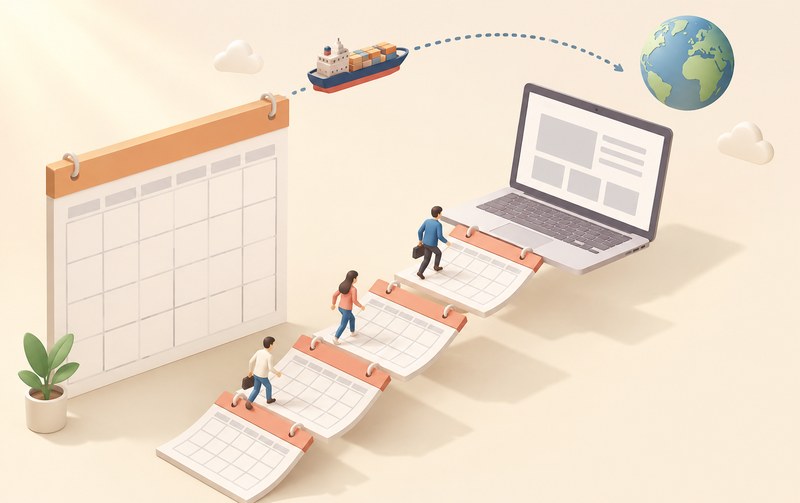
Three items must be ready before the website build starts.First, product materials. For every product you intend to push, prepare at least three to five photos from different angles, a complete specification sheet, and scanned certificates in one folder. Second, company side material: factory shots, short production line clips, founding year, main export markets. Third, the item most often skipped: a keyword starter sheet, thirty or forty search terms grouped by product line. Every page title later depends on it.Why dedicate a week to this? Content written around missing material reads as invented, and overseas buyers notice invented content quickly. If you are still weighing an independent site against marketplace stores, start with the comparison of traffic and customer asset ownership, then set the schedule.
Weeks one to three: framework and core pages
Week one settles the domain and hosting. Pick a domain that follows the brand, choose a server node near the target market, and configure HTTPS plus CDN in the same pass. Sketch the site framework that week as well. A B2B inquiry site needs only a handful of core pages: home, product categories, product detail, about, contact, plus a blog section.Weeks two and three concentrate on two pages. Product detail pages come first because they generate the inquiries. Each one must independently answer three questions: are the specifications complete, is this factory trustworthy, and who do I contact for a quote. Our earlier breakdown of foreign trade website building costs maps where the labor goes, which keeps the budget from drifting. Once product pages hold up, the remaining pages follow the same template in batches. Do not loop on secondary pages.
Weeks four to six: fill in content and trust elements
These three weeks are fine work.Add application descriptions to each product page, written for the customer industry rather than copied from generic catalog text. Trust elements go up in batches: certificates on the about page, workshop and inspection photos beside product content, and two customer cases even if that is all that exists for now. Cut the inquiry form down to four fields, name, email, company, requirement, since every extra field leaks more submissions.Finish the basic SEO in the same pass: page titles and descriptions written from the week zero keyword sheet, alt text on images, and internal links between related pages. Doing this round properly before launch saves a lot of catch up later. For the service scope behind this, see our SEO service page.
Weeks seven and eight: pre launch checks and indexing
Run the checklist. Open every page on a phone, since most overseas buyers browse mobile. Test that form submissions actually reach an inbox. Scan for dead links. Open the home page and product pages in three or four mainstream browsers.Then set up the webmaster tools and submit the sitemap so indexing starts early. The step is simple, yet it often slips weeks past launch and delays the first signals.
The first month after launch: keep the rhythm
Website launch is not the finish line. Publish one or two industry posts per week through the first month, targeting long tail terms left uncovered in the starter sheet, and watch indexing and impressions in the webmaster tools. Whichever product page shows impressions first gets more content next. The first inquiry arriving late is normal, anywhere from two weeks to two months, so do not tear everything down in week four.The point of a weekly schedule is exactly this: compress the build phase, stretch the operating phase, and push the site through the hardest stretch between launch and first traction.
Related Q&A
How long does an independent trade website take from kickoff to launch?
With a weekly schedule, eight weeks is a common pace: one week of material prep, three weeks of framework and core pages, three weeks of content and trust elements, one week of launch checks. Progress rarely stalls on development. It stalls on missing materials and endless design loops, which is why week zero matters so much.
Without a technical team, which platform suits an independent website?
Three mainstream routes exist. SaaS platforms are quick to start and easy to maintain, suiting teams with limited budget and no server interest. Open source systems like WordPress offer more freedom and stronger SEO, at the cost of someone managing updates and hosting. Custom development fits brands with complex requirements. Match the route to your technical capacity and budget rather than chasing the cheapest option.
When do the first inquiries usually arrive after launch?
Anywhere from two weeks to two months, depending on industry competition and how consistently content is published. Indexing speed and product page search performance move the needle most, so submit the sitemap early and keep the weekly publishing rhythm. Expecting inquiries in week one only leads to panicked redesigns.