
Buying furniture online rarely fails on style. It fails on imagination. Will the sofa fit through the door, does the walnut tone match the floor, will the room feel crowded once everything is in place. Nine product photos cannot answer any of that. The furniture industry has therefore split 3D product interaction into several routes, and each route answers a different doubt. Budget talks usually start with a single question, how much does 3D cost. The better first question is which format, because the same money spent on different layers lands in very different places.
Four formats, each solving one doubt
A 360 viewer is the entry level. One chair, one table, customers spin it and check joinery, hardware and grain. It builds trust in detail, mostly for finished furniture with many SKUs and moderate prices. Modeling every item at high quality rarely pays off, so most brands start with bestsellers and leave the long tail to photos.
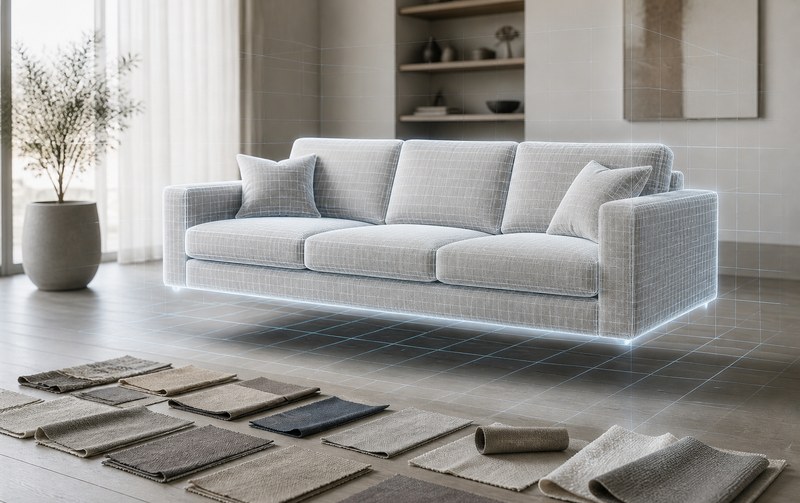
Live material and color switching solves selection. Change the fabric of a sofa, swap a cabinet from dark walnut to cherry, and the lighting on the model follows. This layer is in effect a subset of a 3D configurator, options picked on screen, a plan or quote generated right after. Full house customization depends on it almost entirely, since those orders already begin with material choice.
Scene previews and virtual showrooms handle the imagination gap. A single item placed inside a styled living room reads very differently from the same item on white. A believable room scene costs several times a single product model, so it suits brands pushing complete collections. Sellers of individual pieces often get by without it.
AR placement answers the size question. The camera points at the real living room, a one to one model stands in it, and blocking or tightness becomes obvious in seconds. It is the most charming of the four and the most demanding, weak modeling or poor lighting makes the object look fake, which hurts rather than helps.
Match the format to the business, not to the trend
Finished furniture e commerce should start with product viewers plus AR. Margins are moderate, catalogs are wide, and a full showroom investment rarely pays back. Returns in online furniture cost a fortune in freight, and AR placement cuts the size driven share of them, which in most cases covers part of the modeling spend.
Customization brands should put material switching and plan saving first. Customers care less whether one item looks good and more what the whole room turns out like. Material, color, saved plan, store measurement, the 3D part is only one link in that chain and must connect to how the shop actually takes orders. The logic runs room first, items second, which is the reverse of finished goods e commerce, as described on our 3D configurator service page.
Stores and dealers do best with a light version. Items that cannot sit on the showroom floor go into a tablet, one per salesperson, far more useful than a printed catalog. Precision requirements can relax here, but smoothness cannot, two stutters and the customer loses patience.
Where the money goes, and where it leaks
Modeling is a one time cost, interaction is ongoing work. A simple product model runs from a few thousand RMB upward, room scenes are priced by area and scene count. Three leaks show up again and again. One, chasing industrial grade precision, though web and mini program models have compression limits and phones choke past them. Two, ordering AR before the basic models exist, the order is backwards. Three, rebuilding scenes for every campaign instead of reusing templates.
There is also a quiet cost many forget, material library upkeep. New fabrics arrive each season and models must follow, so ask in advance who pays for those updates.
What to verify before launch
Smoothness comes first, tested on a mid range Android phone, first screen within a few seconds. Hand the model to a non technical colleague and ask one question, does this look like the real thing, any large color shift sends the material back for tuning. Last, the handoff, after viewing the 3D the path to inquiry or checkout must be obvious, a beautiful page with no next step is a dead end. The production steps behind all this are laid out in our article on the two routes of product 3D display, worth a read before quoting suppliers. Finished furniture examples sit in the case gallery for direct comparison.
None of this is about showing off technology. It is about removing, one by one, the specific doubts that stop a customer from deciding. Sort the formats first, then talk budget, and the money lands where it actually works.
Related Q&A
How much does 3D modeling for one furniture product cost
It depends on complexity. A simple piece may cost a few thousand RMB, items with fabric texture and metal parts run higher, and virtual room scenes are priced separately. A sensible start is two or three bestsellers, then expand once the data justifies it.
Does AR furniture placement require customers to install an app
Most implementations now run in the browser or inside a mini program, so customers open a link and start placing items, no separate download. Some older Android phones are not supported, so test on a few aging devices before launch.
Will the 3D model colors differ from the real product
Some difference is normal, the real variable is whether the model was calibrated against the physical item. Fabric and wood grain drift the most, so compare against samples before delivery and retune anything with a visible shift, otherwise the gap turns into returns.