
A product page redesign often ends with two items on the budget sheet: a two minute demo video and a draggable 3D model. Money covers one. Ask the video studio and they say shoot first, ask the 3D vendor and they say model first. Both are right about their own trade and both miss the point. The two formats do different jobs, and the answer depends on the product.
A video is a fixed line, 3D hands the view to the buyer
Every second of a product video is edited in advance: whole shot first, detail closeups next, usage scenes at the end. High information density, controlled pace, narration and subtitles fit naturally, and the same file feeds short video platforms and trade show screens. Web 3D display works the other way. The buyer drags wherever curiosity points and stays as long as needed. The difference sits in the mind. A video viewer always carries one leftover question: what does the side the camera skipped look like. A buyer who has spun the model once feels the inspection is complete. For equipment with selling points buried inside, that feeling moves inquiry quality.
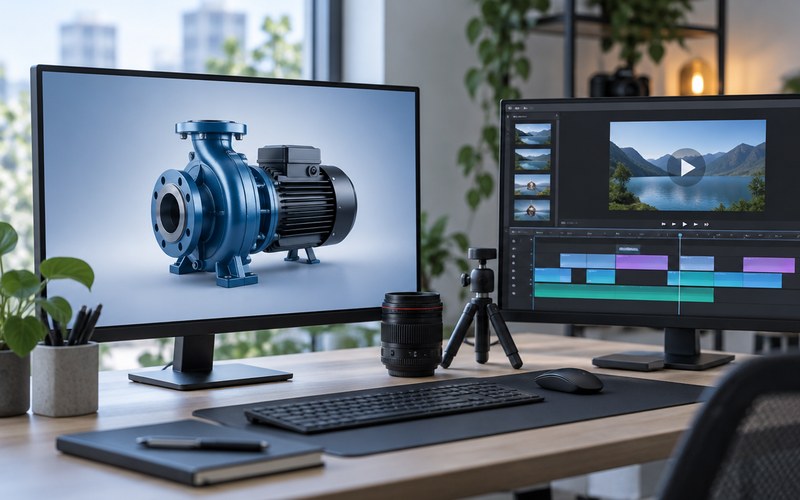
Four accounts to settle separately
Production cost first. Video bills by the second and a revision often means a reshoot. A model is built once and stays useful until the product itself changes, hotspots and configuration options layer on top of it later. Loading is the second account. Hosted video barely touches first paint, while an MP4 uploaded to your own server eats bandwidth. A 3D model must be compressed, and an uncompressed one stutters on phones. The five practical fixes live in the model slimming guide. Reach is the third. Video travels outside your site, 3D stays inside and serves buyers who already arrived, so the two formats follow different distribution logic.
3D for the core models, video for the rest
A wide catalog does not need full 3D coverage. Pick the three to five models that concentrate inquiries and carry complex structure, give them web 3D display, and cover the long tail with video and photos. Video explains fast during the comparison stage. A model answers the can I open it and see inside question at the decision stage, work a salesperson would otherwise do on a call. Whether a product deserves 3D at all follows three conditions: complex structure, configuration options, high ticket decisions. The worth it checklist walks through them before any budget gets approved.
One more choice after 3D is settled
Photo spin and real time 3D are two different routes, and their costs, interaction depth and delivery time differ enough to matter. The five point route comparison settles that argument with numbers. Video and 3D were never rivals. Video helps buyers understand, 3D product display helps buyers confirm, and on one product line the two formats cover separate stages of the funnel, which holds up better than either format alone.
Related Q&A
We already have a product video. Is 3D still needed
Check what buyers keep asking after watching it. When inquiries still probe internal structure or assembly, 3D fills the gap. When the video answers everything, wait. Sales call records are the evidence, not the vendor quotation.
Does 3D perform badly on phones
Only when compression was skipped. With face count and textures under control, a budget phone rotates the model smoothly. Test acceptance on a low end Android device rather than the vendor demo unit.
Which one helps SEO more, video or 3D
Video has a standalone bonus: Google can pull it into video carousels. 3D itself is invisible to crawlers and works only through page text and structured data. Both depend on the page underneath, and titles, content and loading speed remain the foundation.